Showing posts with label NEWS. Show all posts

Sunday, 31 January 2016

2016, A Season In Hull

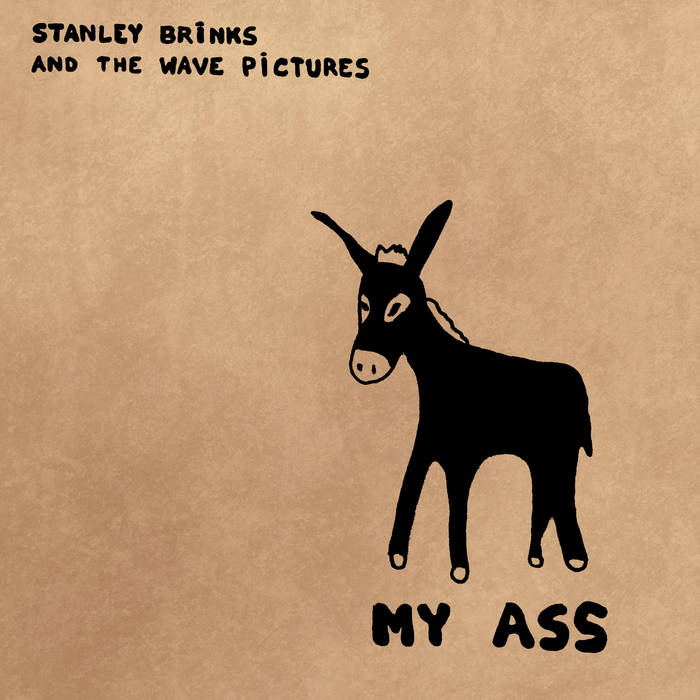
Well, doesn't time fly? A quiet second half of 2015 saw The Wave Pictures doing what they do - touring almost constantly, either by themselves or backing Stanley Brinks. My Ass, their latest collaboration with Europe's most prolific songwriter came and went. An excellent collection in my opinion but perhaps missing the hit single the Gin campaign had (I say campaign because, of course, Orange Juice was left off that LP). I would press Another One Just Like That and put out Make Friends With People From Work - surely a radio hit in waiting? But then, neither The WP's nor Brinks strike one as people who look backwards.

So, here comes A Season In Hull. Vinyl only, no digital, one microphone. Sounds perfect, even if the title reminds of punsters like Half Man Half Biscuit.


Says Tattersall,

Darren Hayman suggested to me that The Wave Pictures make an album with one microphone. Everybody together in one room playing live into one microphone. You get the picture right once and you capture it. No mixing later. The idea appealed to me enormously. It’s a really beautiful sound, the one microphone sound. The results tend to be mysterious and lively, and it’s a very romantic way to record, too. It’s how Bill Monroe and His Bluegrass Boys did it, after all (and that’s how bluegrass music destroyed John Fahey’s life).

Thanks, then, are due to Darren for the idea and to Giles Barrett and Simon Trought for pulling it off. Thanks also to Paul at the Adelphi. The Wave Pictures always have a good time when we visit Hull.

This album is dedicated to the memory of Blind Owl Wilson.

Get your copy now. Amazon have it, as does Cargo via the link on the WP's website. Presumably they'll have it on tour too. Here's hoping they sell all the copies and the future is full of similar little gifts. Speaking of the future, this recent interview suggests the next "proper" LP is done already.

http://figure8magazine.co.uk/default/there-is-a-sense-of-space-that-you-cannot-have-with-multi-tracking-the-wave-pictures-interviewed/


“There Is A Sense Of Space That You Cannot Have With Multi-tracking”: 

The Wave Pictures Interviewed.

The Wave Pictures Michael Wood 3
Never a being a band who cares about perfection, the prolific Wave Pictures are back for another album ‘A Season In Hull’ released on their own Wymeswold Records (named after the Leicestershire town the band originate from). This time around the band has recorded the album over the course of lead singer Dave Tattersall’s birthday, using only one microphone. And in a move just as unconventional as it’s recording, the album is a vinyl only release.
We fired over some questions to Dave covering everything from the decision to record in such an old fashioned manner, to his opinion about the works of Rimbaud.
What inspired the idea to record everything into one microphone?
Dave Tattersall: It appealed to me for a few different reasons. It was Darren Hayman’s idea, not my idea! I thought it was a good idea!
It’s like taking a picture. You don’t HAVE to put it all on separate tracks first, with one microphone (at least) for each instrument. Instead, you just get the microphone in the right place and record everything! No mixing later. And it shows up in your ears when you listen to the record. There is a sense of space that you cannot have with multi-tracking. You can fake it, but you can’t get the real thing. You always want to hear the room: when you listen to a record you should always hear the room that the record was recorded in. Well, you really get the sound of the room with only one microphone.
I was particularly thinking of Bill Monroe and the Bluegrass Boys, ‘Blue Yodel Number 7′. It’s a great record that will always sound fresh and real. I wanted to get that kind of a sound. It has a wildness to it. That’s the one microphone sound! That’s how they used to it!
I was reading ”How Bluegrass Music Ruined My Life” by John Fahey, and in that book he talks about the first time he heard ‘Blue Yodel number 7′ and it completely blew his mind. Best record he ever heard in his life! It just knocked him across the room. It’s a good story and it got me thinking about one microphone recording.
Finally, I wanted to have some fun on my birthday, so I booked the studio and we went in to record.
Do you find changing the circumstances in which you record a way of keeping things fresh?
Dave Tattersall: It can be stimulating. I don’t think of it as strictly necessary, though.
What was the writing process like this time?
Dave Tattersall: Really fast. I wrote all of the songs very quickly. It was fast and easy and enjoyable. It isn’t always like that. But sometimes you get on a roll. It’s easier to write ten songs together all at once, than it is to get ten songs by writing them one at a time.
Why have you decided to make this a vinyl only release?
Dave Tattersall: It was a romantic idea. I liked the idea that the songs would only be available in this way. It’s like a message in a bottle, thrown out to sea.
Of all the albums you have made, which one are you most proud of?
Dave Tattersall: It’s definitely A Season In Hull at the moment. It’s always the latest one that I like the best.
This is your first release on your new label, why did you decide to make the leap to self releasing?
Dave Tattersall: It was just that we are the only people who wanted to do it! We wanted to put out a vinyl only, and we hope that it works and people buy it, so that we can do it again. We need to sell 2000 of them, then it all pays for itself and we can do more fun projects like this in future. We might do some vinyl only live albums and things like that. But we don’t know if it’s going to be financially viable or not! I hope it works out, because I love vinyl records and I love the idea of putting out more stuff in this way. I think it’s a really nice thing.
When you were on record labels, were you given a lot of space to be prolific?
Dave Tattersall: Yes, plenty of space. We’re still with Moshi Moshi, they are going to release our next album, but A Season In Hull was only supposed to be a vinyl only album, and Moshi Moshi didn’t want to do that. So, we decided to do it ourselves.
We’re all sort of sick of the internet, to be perfectly honest. Something that has certain practical advantages seems to have taken over too many areas of life. It seemed nice to make it vinyl only, so that it didn’t even exist in a digital form. It’s a totally futile, but rather romantic gesture. That’s all that it is, but I like it that way. A little romance before the machines take over completely. It’s only a matter of time before what happened in the Terminator movies happens for real.
But things are still good between us and our record label. They’ve been very kind to us, and they completely stay out of the way and let us make our own choices. We’ve always had total freedom; it’s been essential to us.
The title is a play on words with a Arthur Rimbaud poem, are you a big fan of his work?
Dave Tattersall: No, not a big fan, but then I don’t speak French. I’ve read translations of Rimbaud, but I’ll never be able to read the real thing. I didn’t like the versions I read at first. I found that there are some translations that are better than others, but I’m not sure that you can translate something like that at all. So, no – not a fan to be honest. The only poet that I really enjoy reading is Charles Bukowski.
Have you had any ideas about the next album yet?
Dave Tattersall: We’ve got another album finished, and another one that we are half way through. It’s very exciting! It’s the golden age of The Wave Pictures!
If someone was curious about getting into the Wave Pictures, where would you suggest they start?
Dave Tattersall: City Forgiveness.
Have you ever considered releasing a best of for all the Wave Pictures neophytes out there?
Dave Tattersall: No, I’ve never thought about it. I don’t really like the idea at all. I imagine someone will want to do something like that at some point but it doesn’t appeal to me very much. I just want to keep moving forward myself.
Words by Matthew Shearn.

Sunday, 26 July 2015

My Ass!

This little beauty should be coming our way in October:


Not to mention these two even smaller beauties before then:


All can be pre-ordered now from Fika Recording's band camp page. Start clicking here - http://shop.fikarecordings.com/album/my-ass

As the WP's continue sporadic summer touring a couple of interviews have surfaced, both of which make mentioned of a vinyl-only LP at the end of the year - the recorded around one microphone affair we'd previously heard about. Lots to look forward to!

http://www.thefourohfive.com/music/article/in-conversation-with-the-wave-pictures-143

Hailing from a tiny town near Loughborough in Leicestershire, since 1998 The Wave Pictures have been creating bright, brittle pop and woozy, warm ballads enriched by a cosy, analogue feel.
After nearly a decade in obscurity, self-releasing a string of cult albums, guitarist/vocalist David Tattersall, bassist Franic Rozycki and drummer Jonny Helm relocated to London a few years ago and signed to the well-regarded British independent label Moshi Moshi.
One of the most prolific, independent, and yes, awesome British indie bands, The Wave Pictures have collaborated with the likes of Daniel Johnston, Darren Hayman, Jeffrey Lewis, The Mountain Goats and more recently Billy Childish, who co-wrote and produced the band's latest effort Great Big Flamingo Burning Moon. Bursting with energy and ignited with a garage-rockspark, the album (which came out in February) rings loud and bold, showcasing Tattersall's searing guitar solos and sharp lyrical wit. 
I took the boys to Tufnell Park Playing Fields and we discussed their writing process, analogue vs. digital, zoos and their favourite tea.How was working with Billy Childish?
Johnny: It really worked out better than we thought it would, it was just an awesome experience.
How did you guys meet him?
Dave: Through the BBC Radio 6 DJ Mark Riley, who knows him a little bit and knew we were big fans. I got Mark to ask Billy if he was interested in working with the band, thinking that nothing would come out of it, but he was actually excited about working on a new project. He had never heard of us before, but apparently if someone asks him he would probably want to do something with you, because he just wants to work on something all the time. We were very lucky to have him on board, and then we also got on really well making the album.
Was Great Big Flamingo Burning Moon recorded live and analogue like your previous albums?
Dave: Yes, we recorded everything live onto tape machines, and then there were a few overdubs, but just little pieces, like a bit of guitar or percussions, or the glockenspiel that Billy played in one of the songs because he was feeling very adventurous. But the basic things and some of the songs are just all live tapes, and Billy did a great job recording us live in his studio.
Did you use any different instruments you were particularly happy with?
Dave: Not really, because the main thing for me is always the guitar. As for the other stuff, you may put a little something in there to add just a little bit of colouring and flavour, but the most important thing is the guitar and to a less extent the bass, the drums and the vocals.
Franic: And definitely Billy's ideas, as we wouldn't have come up with some of them on our own...
Dave: I really like the glockenspiel, but it's not the most important part, as that is the instrumentation and the interaction of the three us playing live.
Have you ever recorded anything digital, and if not what do you most dislike about that type of approach?
Dave: Yes, we have. The whole album Beer in the Breakers was actually recorded all on a digital 8 or 16-track.I can't remember now... I don't like it as much, but you can do interesting things with digital sounds. Given the choice tough, it is always more exciting to have reels of tapes rolling around as it gives a warmer sound. If I do things with digital, I would still approach it the same way and try to get the same sound. We never build up a track at a time, it always starts with the three of us playing in a room.
This is your 14th album in 17 years, so I guess we can safely say you guys are very prolific. How do you approach the writing process? Do you deliberately sit down to write music or do songs come to you in a more spontaneous way wherever you are?
Dave: That is a good question... it varies from song to song. Sometimes I sit down to write a song just because I feel like it, with no ideas at all, just for fun, thinking it would be good to write some music. Other times the songs present themselves to me when I am not expecting them. It is a real mix, and I often would be writing 10 or 20 songs all at once and leave them half-finished to then build them up all together rather than write one song at a time. I like that way better because it is easier to write 10 songs and get maybe 5 good ones, than writing one at a time and have 5 good ones that way. It is usually just me writing the songs on my own, but for this record, I mainly only had to write the lyrics, take them around Billy's house and then he came up with the music on his guitar. I had no ideas of the tuning while I was writing the words, so some of them were terrible and needed lots of editing, and also, that way you can't have too many songs to start off with, which is my usual approach. This time, I just did the same thing with Billy that I do on my own, writing lots of lyrics and then turning them into songs later.
So you tend to write lyrics first?
Dave: Always. Occasionally though, I might come up with some music first and then add the words, but usually it is a matter of writing lots of lyrics and then sit down with the guitar trying to fit them together. I always think that if the words don't come first it's usually bad, as I don't like lyrics when they are written to fit the melodies someone has come up with.
But are they lyrics with a sort of melody?
Dave: No, just nonsense that doesn't even scan, which is quite important, because if you write lyrics so that they can scan and rhyme, they are going to sound more like song lyrics. So initially, my lyrics don't scan, don't rhyme, and I might make them do that later. You don't want anything to stop you from getting them all out, that is why I don't think about form when I am writing them at all and just fit them to the music afterwards. Whereas most songwriters I know would write them more as poems.
You mentioned earlier that you sometimes write a bunch of songs at the same time and then only end up using some of them. Do you ever go back to old songs?
Dave: Yes, all the time. Some songs don't work straightaway, so you just have to leave them for a couple of years, and then you might find them in the drawer or not, or you might half remember them, go back to them and only then they might sound like a good idea.
The video for 'I Could Hear the Telephone (3 Floors above me)' shows what life on the road is like and how The Wave Pictures love a nice cup of tea before rocking out on stage... What is your favourite tea?
Dave: English Breakfast tea I think.
Franic: Earl Grey.
Johnny: I also like normal English breakfast tea.

The new record's title was inspired by a visit to the London zoo where you, Dave, saw the moon in the still eye of a flamingo. Do you go to the zoo often, in London or elsewhere?

Dave: No, I don't, and I made that up, as when you finish an album the label asks for a track-by-track analysis, and of course you don't always have everything to say, so you make up stuff to fill out the thing. I am actually not that very keen on the whole idea of zoos, as it seems a little sad to me. But I have been to the London zoo.
You have collaborated with lots of artists... is there anyone you haven't worked with yet and would love to do a collaboration with?
Dave: We were actually thinking of Van Morrison as we are big fans. I don't know how it will come about, but if he wanted to go back to his roots in a rock and roll band and make a grungy sort of rock record we would be up for it! I would even pay him to do that, he wouldn't have to pay me. Apart from that, I always think it was good when we did the tour with Daniel Johnston, so more realistically it would be nice to do another tour playing as his band. Doing something with Jad Fair would also be good, and also lots of other people, but Van Morrison is probably on top of the list at the moment.
Franic: Well, I could play bass in the Stones, which would be an improvement probably.
Johnny: And Dylan obviously, as he needs a decent band these days and I think we could help him out.
You guys are originally from Leicestershire. What do you miss the most about the place where you grew up?
Dave: I don't particularly miss Leicestershire, though somehow I miss the early days of the band, as those were the most fun. We were in isolation in a country village, so it was very exciting to form a band and write songs for the first time. But I don't miss anything else about living there as nice a place as it is. London is such a great city and I am the happiest I have ever been living there. 
To me you are the epitome of what true English indie music is, but I am always surprised to hear you list mainly American bands among your influences. How English do you actually feel?
Dave: We didn't know what being English-sounding meant, but I knew I didn't want to put on an American accent when I sang, which is going to make you sound very English to people. Also, if you sing about a place it makes more sense to be singing about a place where you have been to or lived in, that is why I sing about English places. There is actually no difference between being from Loughborough and singing about being in Loughborough, and being from Texas and singing about being in Austin, but as soon as you sing about Loughborough you are called quintessentially English. Most of the bands we like are actually American. We like the Beatles and the Rolling Stones, but they sound pretty American too. It just seems that the roots of the music we like come from the blues and early American music, so yeah I could say we spend way more time listening to American music. I guess the fact that the band sounds English is completely unintentional. 
If you had a super power, what would you want it to be?
Johnny: Flying.
Franic: The same.
Dave : Me too probably.
What upcoming record are you most looking forward to?
Dave: By someone else other than ourselves? Oh god no! We don't listen to that rubbish! But we have got another record coming out around Christmas time, a vinyl only acoustic album, recorded all with just a microphone. It is going to be very special and I am really looking forward to that coming out

http://www.indietracks.co.uk/indietracks-interview-16-the-wave-pictures/

The Wave Pictures are David Tattersall, Franic Rozycki and Jonny ”Huddersfield” Helm. The band, who are based in London, formed in 1998 and have released 14 studio albums. Their newest album, Great Big Flamingo Burning Moon, was written and recorded with seminal punk singer Billy Childish. It was released in February this year on Moshi Moshi, to widespread critical acclaim. Earlier this year they layed the BBC6 Music Festival in Manchester and also appeared on BBC6 Music DJ Marc Riley’s new “All Shook Up” music television show. The Guardian has described their work as “charming, witty songs shot through with Jonathan Richman’s gawky glee and Suede’s doomed provincial romanticism.”
Hi Dave! How excited are you and the rest of The Wave Pictures for your third visit to Indietracks?
We’re really looking forward to it! It’s such a nice festival. There’s always a very lovely atmosphere and we always seem to run into a lot of friends.
Any standout memories from your previous two?
There was one trip where I played a solo show in the church. I had flown from Spain where The Wave Pictures played a festival the night before. I got food poisoning or something. I was extremely ill on the journey. I had to make this epic journey from the south of Spain, two flights, throwing up the whole time. At one point I remember I was lying on the floor of the airport heaving into a plastic bag. I even got wheeled through security on a wheelchair. I was surprised that they let me fly, I was so sick. But I made it to the desk and explained myself to the staff and they just stuck me in a wheelchair; it was nice of them, they really took care of me actually. That was a very extreme day, though. At the end of it all I played this solo show in the church. I sort of felt alright by the point I actually went on stage. That’s not exactly a happy memory though!
A much happier memory was the last time we played. We went on before the Pastels, which I enjoyed doing very much. I used to know John who plays guitar in the Pastels, when I lived in Glasgow. It was nice to run into him again. We had a bit of a chat at some point. I really enjoyed that whole visit to Indietracks.
I remember The Pastels went on and did this long, very dark, Ennio Morricone kind of instrumental, it was very beautiful and heavy, and the clouds burst open and it was a very heavy, very wet rain storm. That was a striking thing. Stephen strumming these minor chords on his Gibson guitar and the rain.
The first time we played is a striking enough memory in itself, just how nice the atmosphere was, how uncommercial the whole festival was. I don’t usually like festivals to be honest, but this one still has that nice village fete feeling. I like it.
The Wave Pictures have been together for such a long time, how do you feel your band has changed over the last 17 years and how have you all managed to stay friends?
We’ve changed quite a lot, even the sound of my voice seems to have changed about a bit over the years. It’s all quite unconscious, but there are changes. You do just change over time, but you don’t realise it as it is happening. On the odd occasion when I hear an old recording of ours I am surprised how different we sound at different points. It’s a bit like looking through a photograph album. I find my voice a bit embarrassing on old recordings to be honest. That’s hopefully changed for the better a bit. I think we’re a bit more confident about doing what we like these days than we used to be. I’m not sure, though, to be honest I’m trying to come up with differences but we’ve probably stayed the same more than that we’ve changed! Certainly we can do very old songs in the set mixed up with the new ones, and they all seem to go together.
How have we managed to stay friends?
I don’t know. Jonny Helm is a pretty easy-going fellow, which helps. Franic and I have a long running pool and darts rivalry. We all really like playing music together, that’s probably the main thing. We still enjoy ourselves. We love music.
To be honest, it seems to me like we went from being a very new band to being thought of as old hats in nought seconds flat. The shelf life of a band isn’t supposed to be very long I suppose. But time flies when you’re having fun. It doesn’t feel like we’ve been going all that long, to me. I can’t really imagine not doing it. I don’t know what else I would do. On my birthday this year, I booked a studio and went to do some recording with Jonny and Franic. I couldn’t think of anything more fun than that! That was my birthday treat to myself, a bit of recording with the band. That’s the most fun thing in the world to do.
After 14 albums, Where do you find the inspiration to write?
The main thing is that it’s just very exciting to write a song. I write far more than that we can use. It’s a kind of madness I suppose, you just start processing the world into songs. It’s not madness really, though, it’s just a fun thing to do. Making up songs is probably the most fun part of being in a band. I always think – just do it, you can worry about if it’s any good later. Or don’t worry about it at all. Don’t let anything stop you just getting them all out of your head.
How do you decide what songs to play at gigs? And just how do you remember them all?
We can’t remember them all! Well – I can’t remember all those words. I can remember quite a large number of them, though. We decided at a certain point to not use set-lists. We just go onstage and start playing. I usually choose which ones we play. At the end of the first song, I choose what to do next, and we just go through the whole set like that. It’s not pre-determined. It’s good to be spontaneous I think, it suits us better. Sometimes I start a song and Jonny and Franic can’t remember which one it is, or Franic can’t remember what key it is in, but that doesn’t happen too often. It’s pretty funny when it does happen, though.
The Wave Pictures often get the title of the ‘one of the best live bands’, why do you think this is? 
Well it’s because we are really wonderful! I’m happy if people think that. We certainly enjoy ourselves playing live.
You got to work with Billy Childish on your latest album ‘Great Big Flamingo Burning Moon’, how did that come about? What was it like with working with one of your heroes?
Marc Riley brought us together. He’s such a star, he’s done us so many good turns. He put us in touch with Billy, and Billy agreed to make a record with us.
Billy wanted to co-write the whole thing with me, he thought it would be more fun that way. I said – OK! It was a total blast. Right off the bat, we found we could write songs together very easily. It all just came together very easily and pleasantly. We got on well and we had fun. Billy and The Wave Pictures like a lot of the same things – we talked about John Lee Hooker a lot, early Rolling Stones, Link Wray, and Billie Holliday. Of course, he had never heard our music, but he liked it, he got where we were coming from straight away. It was plain sailing and I like the record we made together. Billy is a wonderful bloke – he’s a genius, and a very nice person too.
Have you heard the stuff Billy has done with The Spartan Dreggs? It seems that this particular project has gone completely under the radar. It’s so good! It’s such a shame that so few people have had a chance to hear them. The album ”Forensic RnB” is an absolute masterpiece. Everything The Spartan Dreggs have done is great! Billy plays the bass and there’s this guy Neil on lead vocals. Neil has a very strange, totally compelling voice. It’s completely sincere stuff, very real and just beautiful. It’s extremely refreshing to listen to, like a strong sea breeze! It’s the best new music I’ve heard in ages and ages from anyone. It reminds me of when I first heard The Who’s debut album – that’s how good it is, that’s how fresh and alive it sounds.
That would be my main recommendation for you, but also I want to give a shout out on behalf of my mate Sam James, the greatest songwriter in the world at the moment. He’s just completely ignored by everyone. I don’t know why. I can’t figure out how someone can be so talented and so completely ignored, but that’s how it is. Sam James is a New Yorker and he’s a school teacher who makes records in his spare time. He puts them up on line, you can find them. Listen to a song like Manuel for instance. I hope you can find it! He’s a total genius.
Is there any bands or sights in particular you are looking forward to seeing at Indietracks?
I’m looking forward to seeing my friends, there’s going to be a lot of people hanging around. And I’m looking forward to eating a hotdog in the sunshine. And Tigercats are always rocking – especially now they have Paul Rains on guitar. I always enjoy watching them. We’ve done a fair amount of gigs with them. It is always a pleasure. I love playing shows with Tigercats – they are a really great band and very nice people as well. And Paul is one of the best guitar players around.
Thank you so much Dave, cannot wait to see you and the band at the festival.


Monday, 11 May 2015

Wednesday, 18 February 2015

Release Week!

By now you should all be enjoying the new Wave Pictures LP which gets better and better with every listen. It seems like there's a bigger groundswell of support for this album than past ones, with good reviews and sold out gigs backing it up.

I Can Hear The Telephone is also out as a single this week with a Billy Childish lead vocal on the flipside - another Fogerty tune in Walking On The Water. Good stuff!

There haven't been many print/online interviews yet (I would love to hear what Mr Childish himself had to say about the recording/project) but there's a pretty good one today which talks about another new album on the cards - a single mic, Dan Of Green Gables style one. Proper release not cdr only please, Overlords of the music industry!

http://figure8magazine.co.uk/default/slaving-over-things-isnt-the-way-to-go-wave-pictures-interview/

‘Slaving Over Things Isn’t The Way To Go’: The Wave Pictures Interview.


WavePicsandBillyChildish
This week Leicestershire formed three-piece The Wave Pictures, a group whose rough hewn music owes a heavy debt to bands like Television and The Modern Lovers, unleashes their latest album ‘Great Big Flamingo Burning Moon’.
For this, their fourteenth album in seventeen years, cult musician Billy Childish has come on board. Not only has he lent them his equipment, but he has also produced and co-authored the album, making the it a more of a collaborative piece.
So Figure 8 managed to chat to front man Dave Tattersall in an interview that was born out of rather chaotic circumstances. Delayed at first because the band were due to record a session for 6music, then later on the band found themselves stuck in Paris thanks to a fire in the channel tunnel. Finally the week after the fire, we took the time to chat to Dave about working with Billy, his cavalier attitude to writing and recording, and his love of country music.
The new album’s coming out in February. And I’ve noticed that Billy Childish is on there. In what capacity did you collaborate, because I know he lent some old equipment to you?
DT: It’s much more than that, Billy and I wrote all the songs together. I wrote the words and he wrote the music, I suppose. I mean we wrote them sitting side by side on his sofa. Yeah, he plays guitar on the record and he produced it basically. He mixed it, we used all his equipment. We used his studio. He did overdubs. There’s a total collaboration between Wave Pictures and Billy Childish. He’s someone that we’ve listened to for years. And we were doing something with Mark Riley, he’s a DJ on 6 Music, we were having a drink and he asked us what we were listening to at the moment.
And we said, “Oh, we’re listening to loads of Billy Childish.” And he said, “Oh I know Billy.” He speaks to Billy on the phone from time to time. I think they’ve never met in person, but he speaks to him on the phone. We said, “Well ask Billy if he’s interested in recording a band,” thinking nothing would come from it and we’ve never hear from him. And he just said yes, he wanted to do it. And he suggested writing the songs together as well.
And at that point, we didn’t know that this was going to be the next Wave Pictures album, we didn’t know what it was going to be. It was just a little project for its own sake. We’re working on stuff all the time and recording all the time. And so we just sort of went with it, yeah, let’s write the songs together, and then we used all his equipment, his guitars, everything. And then we just all loved it, Billy loved it. And then we just decided to release it. It’s a complete collaboration. It’s totally a one off sort of album for us.
I did actually read the press release and there’s a lot of talk of using a lot of old equipment. Was it recorded in a very old fashioned way?
DT: Yeah, I suppose you could say that. It was recorded onto tape and two microphones on the drums. The band playing live, live vocals and then a few overdubs. So a very ’60s way of recording. And that’s always how the Wave Pictures have approached things. We always want to play live in the room. You know, the modern thing is multi-tracking and doing everything separately. You track the drums first and then you put overdubs on. That’s how they make records nowadays, not to sound too much like an old man. But yeah, that’s got no appeal for us really.
You’ve always been a band that has never been too involved into the whole process of recording. Your music has always sounded a bit rough around the edges.
DT: That’s important to us. That’s sort of what we sort of like listening to as well. When you listen to records that are made that way, they sound very spontaneous and sort of timeless really. Whereas if you go with whatever the latest fashions are, everything sounds a bit dead really and a bit dated. And with that live thing, funny things happen. Little moments happen. And even if someone listening to it doesn’t register that that’s what they’re hearing, there’s a kind of freshness to it that we always want our recordings to have.
It reminds me of an interview with Graham Coxon that I read, back when he was doing his solo albums. People thought he was being a bit odd for doing stuff on analogue tape. And he said, “Well all these big pop records from the ’60s, Jimmy Hendrix, all that kind of stuff was done in one take on analogue tape, it’s not lo-fi.” Yeah, people seem to forget that.
DT: Well that’s the good stuff. I think I read somewhere that Bob Dylan didn’t do any overdubs on any record until the 1980s. Every Dylan record you listen to, its people playing live in a room. No overdubs. And let alone multi-tracking, let alone recording everything one thing at a time. He didn’t even put anything on afterwards. When it was finished, it was finished. I think that’s the best way to make records or at least those are the type of records that I like to listen to. I don’t like to listen to the other kind of records.
And I think that stuff still sounds great. It sounds better than the stuff people are doing now. So it’s still something to aspire to. And especially if you can use tape, if you can use analogue tape, it just has its own quality. It adds a really great quality of sound. And digital is very good and you can do an awful lot with digital. I’m not like anti-digital all the way, or anything. But it’s much more exciting to use the big tape reels and the sound is warmer. Tape compresses things in a way that’s much more human. It sort of curves off the sound, whereas with digital you get lots of little blocks of sound, and it’s got a kind of coldness to it and a tape’s much warmer, yeah.
So is your approach to recording albums similar to the way you write material?
DT: Yeah… Not exactly. I think that they’re quite different things actually. But to some extent I have a slightly cavalier attitude towards both. Which is to say that my attitude is pretty much that I want to entertain myself and by writing or by recording, or by whatever I do, and I’ll worry later about whether I think it’s good or not. I’ll worry about that some other time. Or I’ll never worry about it. I’ll never judge it. It’s just for its own sake.
You never write a song thinking, “I should write a song like that.” Or “people like that other song, so I should write a song like that other song that they liked.” Or “I should write a song because it’ll be popular” or “I’ll write a song to be difficult.” You’re just writing for its own sake, for the sake of writing, which is just its own pleasure and then you’re recording just as its own pleasure. And then playing live is its own. They’re sort of self-serving things, I suppose.
They’re not done for the end result, making music. So that’s the same. But I also often think with lyrics, the best lyrics are just written very quickly. Often slaving over things isn’t the way to go. If you’re feeling inspired and you write something, even if it’s a bit silly, and a lot of my lyrics are very silly, I like to stick with it. They come from some strange place that’s interesting to me to revisit.
Yeah, it differs from songwriter to songwriter, because I was reading what somebody said about Leonard Cohen and Bob Dylan-
DT: Yeah, that’s right, yeah.
Leonard Cohen can spend 15 years on a couplet-
DT: Yeah, the story is that Leonard Cohen and Bob Dylan were talking and Bob Dylan said, “Oh, I like that song of yours.” And Leonard Cohen said, “Oh thank you very much. It took me four years to write that song.” And then Leonard Cohen says, “I like that song of yours.” And Bob Dylan says, “Oh thank you very much, it took me 15 minutes.” I don’t think that reflects badly on either of them. But they have very different talents, Leonard Cohen and Bob Dylan.
Bob Dylan has got a very wayward brain and he’s obviously just capable of writing verse after verse after verse after verse very quickly. And there’s a spontaneity to everything that he does, and there’s sometimes an obtuseness, and a lack of meaning. Leonard Cohen is very precise. It’s much more like literature, he’s a poet in the first place. And the choice of words is much more pointed, I think, with Leonard Cohen. I love both of them very, very much. Personally, I’m not saying I’m as good as Bob Dylan, that’s for other people to say. But personally I’m more on the Bob Dylan side of it.
I like to just throw stuff up, throwing stuff up and then seeing what works later. And I don’t judge it. And I don’t think I should be the judge of it. I think other people should tell me “I like that song” or “why don’t you do that song?” or they don’t like this song, or whatever. That’s not on my mind at all. I just like doing it, if that makes sense. The end result is kind of boring to me. That’s the weird part of it. The fun part is the doing of it. It’s the making of the things. That’s the part I like.
I noticed the last album you did (‘City Awakenings’), was written on a US tour, do you feel that your albums are a snapshot of a time period?
DT: Yeah, to some extent, yeah. They do remind of the time that they were written and the things that were going on in my head, those times, yeah. I wouldn’t say that they’re autobiographical for the most part, and some things are made up completely, or some things are exactly what happened. It’s a total free-for-all. Basically I will do anything to fill up a blank page. That’s about the size of it (laughs).
I once read somewhere that you said that you don’t believe in writer’s block. Do you think having a similar sort of attitude- like always writing ideas, or continuously do something, is a good way of preventing writers block?
DT: Yeah, I think so. I think that writer’s block is something that- I always tell people, “Don’t sit down and try to write a song and think, ‘what have I got to say? What’s this song going to be about? What am I going to write?’” Then you’re just staring a blank bit of paper thinking about what you’re going to do, not actually doing it. And then you’ve got writer’s block basically. I think just write all the time, anything you can and worry about it later.
So on the American tour, for instance, I just wrote, and wrote, and wrote. I filled a notebook while we were driving around and turned it into songs later when I got home. And now that isn’t the only way to do it. The great thing about making music is that there’s just a million different ways that you can go at it. And a lot of very talented people I know, they write in very different ways than me. And that’s fine. But I would have thought that you can avoid writer’s block by not putting that kind of pressure on yourself. That’s what I think.
I feel like writer’s block is a sort of an ego problem where you kind of think, “I should write something really great. I’m really great and I must write something really great and what will it be?” And you sort of start tearing yourself up. The trick is just to make stuff up all the time. And not to question too much whether it’s good or bad. I think that the part of your brain that’s a critic, if you like, that sort of thinks, “Oh, that’s not right,” that part of your brain needs to shut up when you’re making a song.
You make up the song, and then by all means once you’ve finished it and you’ve recorded it and you play it, then you switch on the critical part of your brain and think, “Oh, that’s not quite right” or “that doesn’t work” or whatever. Do you know what I mean? It’s kind of necessary- I think it’s necessary to not be too critical, really, and to just do it and other people could well say, “Well that’s why you’re rubbish” and I have to say, “Fair enough.” I just do it because it’s fun to do. It’s not because I expect anything else afterwards.
Over the past few years you’ve toured the US quite a bit. I’m curious, what cities you usually get the best reception in?
DT: New York is very good. Chicago was good. San Francisco was good. The cities that you’d expect, I suppose. Touring America overall was extremely hard. We were lucky because the last tour was the long tour. And we were in a van with Allo Darlin’. And Allo Darlin’ is just the nicest bunch of guys that you could meet, really. And they made it into a great trip. Things I’ll remember for the rest of my life very fondly.
But the reality of touring America is that without having had a hit out there, or even a particularly glowing pitchfork review or a song in a film, or any of those kind of things that you need, it’s backbreaking work and it costs you loads of money. Touring America costs us money, and our living is touring. We make a living from touring and playing in small clubs in Germany and Spain and the UK and France and stuff. We can’t really afford to do it. America is very, very hard. And it costs so much just to get there, with visas and everything.
And then traveling around, you can’t even play. It’s such a strange country really. We can tour Germany for three weeks. You can’t tour Texas for three weeks. You play one city in each state. So you’re driving nine, ten hours every day, playing all the capital cities of each state. It’s backbreaking work, really, America unless you’re one of those lucky people who happens to have had some sort of a hit going out and it’s some kind of a buzz. But basically we can play to, I don’t know, 300 people in New York but as soon as you get outside of that, when you get down south or whatever, you might play to nobody or 20 people, or whatever.
So you drive nine hours, you play to nobody. You drive nine hours, you play to nobody. And it all costs money. So America is very, very tough. And it’s a very strange country, really strange. In Europe, we’re used to so much variety in such a small space. We’re used to the difference between Paris and Berlin and Madrid and Milan and Switzerland, Austria. You know we’re used to a tremendous amount of variety and history in a very small part of the world.
America, which is vast, is all the same. It’s all exactly the same. Every city looks the same. They’re all built on the same grids for cars. So it’s a very lonely, and sort of strange country when you get out about in it. As much as I love New York, I love Chicago, I love San Francisco, it’s a totally different experience if you’re in Baton Rouge or Orlando, Florida or whatever. America is very, very homogeneous.
It doesn’t actually surprise me that you said New York was quite a good place to play, because a lot of your influences come from there. People like Television, Jonathan Richmond- even though I think he was a transplant to New York.
DT: Yeah, and The Velvet Underground, I guess in the first place. Dylan is another New York transplant like Jonathan Richmond. He’s not from there, but you kind of associate him with New York. I do anyway. Yeah, I love New York. New York’s one of the best cities I’ve ever been to. I’ve got a lot of friends there. We always play great shows there. I think New York is very different than America. America is a different kettle of fish from New York, really. You can walk around New York. It still feels like a pedestrian’s city. You can’t walk around Los Angeles. It’s just for cars. Nobody’s walking. Absolutely nobody’s walking.
When I was at University a lecturer was telling us about the first time he went to Los Angeles, he waited on the pavement and people just looked at him like he’d been beamed down from another planet.
DT: Yeah, it’s a very, very strange feeling. A lot of those cities, Los Angeles is like that, Miami is like that, Seattle. Well, Seattle may be less so. But a lot of the cities, there’s no centre. You feel as if you’re always on the outskirts of the city. A mate of mine moved to San Diego and he really likes it. He’s happy there but I couldn’t imagine living in somewhere like San Diego. I’ve got to say. You’ve got to drive basically. You don’t feel like you’ve ever arrived anywhere if you’re on foot. You’re always next to a big road. It’s a very strange country, America, because I’m so in love with American culture, films and books and especially music.
Almost all the music that I really love is American music. And going back to the blues and jazz and things like that and as you say Television, The Velvet Underground. But god, country music. All the things that I love, I was very excited about going there. But I would think twice about doing a tour like that again. What I could imagine doing again is flying over and doing New York and then flying over and playing Los Angeles, or something like that and coming home. It was six weeks of the hardest kind of touring, really hard touring.
Sleeping on people’s floors and then driving nine hours before sound check and losing money all the while that you’re doing it. It’s not something that I can afford to do every year, basically. I can only just afford to live as it is, touring Europe, which is very close and very pleasant. And you see a lot of great cities and you can travel around one country and play everywhere in that country, doing like two hour, three hour drives every day. Maybe you do one or two five hour drives, that’s okay. I don’t mind that. But I could live without nine hours a day and playing for no people.
It’s funny you brought up country music. Listening to your music, I wouldn’t have thought you’d be into that.
DT: You wouldn’t have thought?
Yeah
DT: No, I’m a huge country music fan. Yeah, yeah. Yeah, I mean I love all the sort of roots music of America. I love the blues and the thing with country music, the narratives that you have in those songs, a lot of story songs, which are very compelling and very sort of existential actually, and very simple in how they can tell you a whole story in three minutes. And you really feel like the character is real. I mean I understand that a lot of people just don’t like the sound of country music, they don’t like the twangy guitars and the warbling voices and all that.
I love all that. I love the sound of it in the first place. But then also I guess I sort of really like that sense of character that Townes Van Zandt is singing, or Hank Williams or Waylon Jennings or Willy Nelson or Johnny Cash, or whatever. If they say “I walked into the bar” you believe that they walked into a bar. You’re just like, okay, you walked into a bar. What happened next? Whereas with soul music, which I also like, it’s not like that. If Wilson Pickett screams “I walked into a bar” you don’t actually believe him. The words he’s saying are more like they’re just dressing the music really. And that’s true of rock.
I like that country, I guess, the lyrics come first I think. I think the music is there to support the lyric. I like it that way round. I like it the other way around, too, but the rock thing or the soul thing, pop thing is more like the words are just dressing the music. I guess that’s the thing that really excites me about it.
Well there’s a radio station near me, and one guy on there plays all that commercial stuff. That was all I knew until I started getting into people like Townes Van Zandt and Gram Parsons.
DT: Yeah, Gram Parsons as well. There’s an awful lot of terrible country music. You can get really misled. But that’s true of anything. You can hear Guns N’ Roses and think that bands with guitars were terrible, you know? You don’t really find the good stuff straight away. But yeah, Hank Williams, Townes Van Zandt, Johnny Cash, Willie Nelson, Merle Haggard, Tammy Wynette, Loretta Lynn. That’s all just great stuff and totally real, I think. Completely honest and real. Garth Brooks is crap. There’s crap everywhere. Crap country does rather seem to dominate people’s view of country. I know, it’s a shame.
So you’re touring around the release of the album. What plans have you got after that? Are you working on any material?
DT: Yeah, we’re doing some recording at the end of this month, at the end of January before we go on tour. I imagine that we’ll just keep on doing stuff. The next big session is the end of January. I’ve written an album and I’d like to record it into one microphone, like the Billie Holiday thing I was telling you about with all acoustic instruments. Acoustic guitars, acoustic bass. Paul Rains from Allo Darlin’s going to play on it. Got a couple of friends doing percussion and things like that. So I think that should be really nice. I mean that’s the thing that I’m really looking forward to is making that recording at the end of January. And then we go on tour after that. After that, I’m not sure.
Okay, well it’s been great talking with you, Dave.
DT: Yeah, thanks. Sorry again about all the long wait and everything.
Yeah, thanks
DT: Pleasure
Okay, have a nice day
DT: Yeah, you too, mate. Cheers
Alright, bye
DT: Bye
Words by Matthew Shearn.
‘Great Big Flamingo Burning Moon’ is out now on Moshi Moshi.

Monday, 9 February 2015

LP Track by Track

As we've had with many of the previous LP's, David Tattersall has written a track by track which has been published on the Quietus today and follows here. Don't forget - new LP out next week along with the single of I Could Hear The Telephone (3 Floors Above Me) out the same day. According to the band's website the b-side is yet another CCR cover, but this time sung by Billy Childish. It would be great if Billy now uses the WP's as backing band of choice!

Track By Track:

'Great Big Flamingo Burning Moon'
Once I saw the moon in the still eye of a flamingo, motionless on one straight leg in London Zoo. And once I saw a flamingo in the moon, this great big pink moon that hung in the sky over Portugal and looked like it was on fire.
And this song has yet another moon in it: the drum roll that Jonny 'Huddersfield' Helm peels off in the choruses is pure Keith Moon. People tend not to listen past my voice and notice things like The Who, lurking (or pogoing) in the background. But there they are. Billy plays the guitar on this one and he sounds just like Pete Townshend to me.
'I Could Hear The Telephone (3 Floors Above Me)'
The Wave Pictures in a nutshell: the Modern Lovers with Rory Gallagher on lead guitar.
It's important to mention the input of Juju Claudius, who sings backing vocals on so many of the songs and is such a big part of the character of the album. Billy, often against the judgement of everyone else in the room, took the time to work out backing vocal parts for Juju, which brought another dimension to the songs. It's hard to imagine this song without Juju's vocal line on it.
'Katie'
Nearly all the songs have creatures in them: caterpillars and frogs and foxes and dragonflies; crawling, flying, running. This song, for instance, appears to be about a mole.
'At Dusk You Took Down The Blinds'
Billy said this was a song of genius and I agree with him.
'All The Birds Lined Up Dot Dot Dot'
This sounds a bit like The Troggs. At least, it would be nice to think that it does. Who loves The Troggs? We do! The beautiful, brilliant Troggs, so different from all the pompous bands around now it seems like they live on another planet.
'Frogs Sing Loudly In The Ditches'
People call this kind of lyric stream of consciousness and wonder where it comes from. In this case it comes from a tourist information board next to the ruins of a castle near Rye. I don't believe in stream of consciousness but I do believe that lyrics are everywhere.
When we recorded this one the whole album started to fall into place. Billy said we sounded like "a weird Cream". He proceeded to put the heaviest, bassiest feedback under it.
'Sinister Purpose/Green River'
Ever since we were teenagers, Creedence Clearwater Revival have been a touchstone band for us. We just wanted to pay tribute to them. To me, they're one of the great 60s bands, and [John] Fogerty is a hero to me for his guitar playing and his lyrics. What they did just has so much personality, such strength of character. It was Billy's idea to do two Creedence covers. He said, "That way people will know you've really got an issue!" and burst out laughing.
'Fake Fox Fur Pillowcase'
A close friend told me I had the lopsided face of a giraffe. I had never thought of myself that way before.
Billy and I bonded over a shared love of a lot of the same music: Billie Holliday, Slim Harpo, The Who and especially Jimmy Reed, whose magnificent song 'I Found Joy' is referenced in 'Fake Fox Fur Pillowcase'. When we were going for live takes of the songs, Billy would on occasion stop us and remind us to take it easy, to sit back on the beat. "Think of Jimmy Reed," he would say, "Jimmy Reed rolls along with a broken wheel... where's the broken wheel?"
Even though we don't play the blues, Jimmy Reed is a key influence. One of the very earliest songs I ever wrote for the band was called 'Jimmy Reed', recorded in the kitchen in Wymeswold on a four-track cassette machine when we were 18. I'm glad he makes an appearance here, too. It makes sense to me. Everything about this record was exciting for us, the way it's exciting to make music when you first do it when you're a teenager. You almost can't believe you're really doing it; it's mysterious and thrilling. When I sing about Jimmy Reed in this song, all that stuff comes back to me.
If you want to hear Billy's take on Jimmy Reed, I highly recommend The Jimmy Reed Experience by Thee Headcoats – a beautiful, beautiful EP of Reed covers.
Billy called the solo I did at the end of the track "bagpipe guitar". He said he could imagine Paul and Linda marching in.
'The Fire Alarm'
It's the end of the world and we're rocking out!
'The Goldfish'
For my new pet goldfish, Mahi, who has brought so much pleasure into my life.
'We Fell Asleep In The Blue Tent'
Billy plays one of the best guitar solos of all time on this one. I really mean that. It's killer.
'Pea Green Coat'
The last song on the record was the first song that Billy and I wrote together. The music is all Billy's. What a riff! And that's studio engineer Jim Riley playing the best Brit-blues harmonica since Lee Brilleaux left us.
I really did see someone wearing a pea green coat, seeming somewhat lost in a crowd of black coats, in St. Pancras Station once, and I wished that they were waiting for me. That image stuck in my mind for years, and came out here. The rest of the story owes something to John Boorman's Point Blank, or, more precisely, to a dream I had the night I watched Point Blank for the first time

Sunday, 11 January 2015

The Wave Pictures 2015

It's 2015. What do we have to look forward to? Well, on the Wave Picture front it would seem quite a lot.

Ahead of their double session on Marc Riley's BBC 6 show this week they appeared on Saturday on Resonance FM:


The interview is particularly interesting as David Tattersall documents more for us to look forward to:


* A second single to be released the same day as the album


* A sequel to the original Tattersall/Andre Herman Hune album


* A Jonny Helm 10 inch.


So added to the LP we're all looking forward to and the latest WP/Stanley Brinks LP which has been in the bag for sometime and should see a release on Fika this year, it looks like 2015 should make up for an album-less 2014 (albeit one with an EP, a collaboration LP and a covers LP!)


Monday, 1 December 2014

New Single Out Today

I hold it in my hands. It exists in the material world. Today is the release day for Pea Green Coat which is out on 7 inch on Moshi Moshi. Go and buy it and convince the record label it's still worthwhile printing up singles. It's also available digitally for those of you living in the future. Either way, it comes with exclusive b-side Gene Tierney which is an even more Childish-like tune than the A-side. Here's the cover:

There's no note on the sleeve as to who did the cover but the eagle-eyed garage-rockers amongst you will notice the similarity to recent Wild Billy Releases:


It's not just the songs, instruments and production he's lending a hand with. It will be fascinating to hear from the man himself on this collaboration. A week today the new Wild Billy Childish and The CTMF LP comes out - Acorn Man - so I shall be scouring any interviews he does for this in hope of a WP's mention.